
What is Brackish Water – Definition & Facts
Learn what brackish water is, its characteristics, and uses. Understand the difference between fresh and salt water.

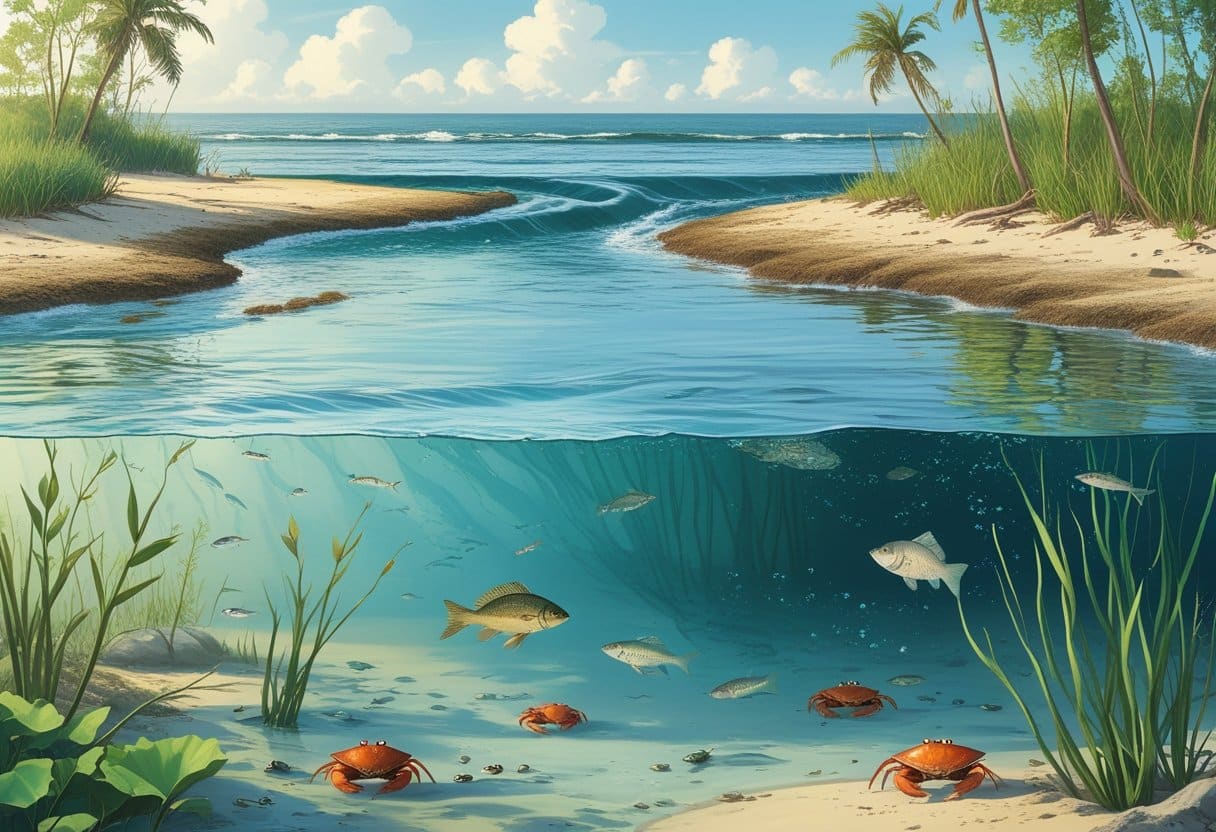
Water exists in many forms across our planet, but one type sits perfectly between fresh and salt water in a unique category. Brackish water contains more salt than freshwater but less than seawater, with salinity levels between 0.5 and 30 parts per thousand.
This makes it distinct from both the water we drink and the ocean water we swim in.
We find brackish water in fascinating places where different water sources meet and mix. Estuaries, mangrove swamps, and certain seas create these special environments.
The Thames Estuary becomes brackish between Battersea and Gravesend, showing how rivers gradually transition from fresh to salty water.
From providing nursery grounds for fish to offering new sources of water through desalination, brackish environments play crucial roles.
Key Takeaways
- Brackish water has intermediate salinity levels that create unique transitional environments between freshwater and marine ecosystems
- These waters form naturally in estuaries, mangroves, and coastal areas where different water sources mix together
- Brackish environments support specialized wildlife and offer important water resources for human activities like agriculture and industry
Defining Brackish Water
Brackish water contains between 0.5 and 30 grams of salt per liter, placing it in the middle range between freshwater and seawater.
We can measure this salinity using specific gravity readings and parts per thousand calculations to determine exact salt concentrations.
Salinity Characteristics
We define brackish water by its distinctive salt content. The salinity ranges from 0.5 to 30 parts per thousand, which translates to 0.5 to 30 grams of salt per liter.
This range creates a specific gravity between 1.0004 and 1.0226. The salinity levels can change dramatically in the same location over time.
Tidal movements and seasonal rainfall cause these fluctuations. River flow and ocean currents also affect salt concentrations.
Brackish water is not considered a precisely defined condition because of these variations. The salt levels make brackish environments unique from other water types.
Comparison to Freshwater and Seawater
We can easily distinguish brackish water from other water types by salt content. Freshwater contains less than 0.5 parts per thousand of salt.
This low salinity supports different plants and animals than brackish areas. Seawater contains 30 to 40 parts per thousand of salt.
Marine water has much higher specific gravity than brackish water. Water with salt concentration greater than 30 parts per thousand is considered saline.
Brackish water sits between these two extremes.
| Water Type | Salt Content (ppt) | Specific Gravity |
|---|---|---|
| Fresh Water | <0.5 | <1.0004 |
| Brackish Water | 0.5-30 | 1.0004-1.0226 |
| Salt Water | >30 | >1.0226 |
Measurement Methods
We measure brackish water salinity using several reliable methods. Refractometers provide quick readings of salt concentration in parts per thousand.
These devices work by measuring how light bends through water samples. Conductivity meters measure electrical conductivity to determine salinity.
Salt water conducts electricity better than fresh water. Hydrometers measure specific gravity directly.
We float these instruments in water samples to get density readings. Digital salinity meters combine multiple measurement techniques for accuracy.
Laboratory testing provides the most precise results for scientific studies. We often express results as parts per thousand rather than percentages.
This measurement system makes it easier to compare different brackish water sources.
How Brackish Water Forms
Brackish water forms through both natural mixing processes and human activities that alter water salinity. The most common formation occurs when freshwater rivers meet saltwater oceans, though several other processes create these intermediate-salinity waters.
Natural Formation Processes
The primary way brackish water forms naturally is through the mixing of freshwater and seawater in estuaries.
These areas develop where rivers flow into oceans, creating dynamic zones with constantly changing salt levels.
Estuary Formation:
- River water carries sediment and nutrients downstream
- Ocean tides push saltwater upstream
- The two water types mix in varying proportions
We also find brackish water in brackish fossil aquifers, which are underground water sources that contain ancient seawater mixed with groundwater.
These formations develop over thousands of years as geological processes trap and modify water underground.
Coastal marshland creates another natural source of brackish water. Storm surges and high tides flood these low-lying areas with saltwater.
The water then mixes with existing freshwater from rainfall and streams. Some seas and lakes naturally maintain brackish conditions.
The Baltic Sea stays brackish because it receives massive amounts of freshwater from surrounding rivers while having limited connection to saltier ocean waters.
Human-Made Sources
Civil engineering projects create significant amounts of brackish water through various construction activities.
Dikes represent one of the most common ways humans alter natural water salinity patterns.
Engineering Activities:
- Building dikes changes how freshwater and saltwater mix
- Damming rivers affects downstream salinity levels
- Harbor construction modifies natural water flow
We create brackish water pools intentionally for freshwater prawn farming. This process involves flooding coastal marshland with controlled amounts of saltwater and freshwater to achieve optimal growing conditions.
Industrial activities also produce brackish water as a byproduct. Power plants use brackish water for cooling systems, and the salinity gradient power process generates brackish water as its primary waste product.
Mining operations sometimes encounter or create brackish conditions when they intersect underground water sources with different salt concentrations.
Brackish Water Habitats and Ecosystems
Brackish water habitats form where freshwater meets saltwater, creating unique salinity regimes that support specialized plant and animal communities.
These ecosystems include river estuaries with fluctuating salt levels, coastal lagoons with varying water exchange, and mangrove swamps that filter between land and sea.
Estuaries and River Mouths
We find estuaries at locations where rivers meet the sea, creating dynamic environments with constantly changing salinity levels.
The River Thames flowing through London serves as a classic example of a river estuary system.
Salinity Changes:
- High tide brings saltwater upstream
- Low tide allows freshwater to dominate
- Seasonal rainfall affects salt concentrations
- Daily fluctuations create zones of different salinity
These river estuaries support diverse fish populations that move between salt and freshwater during different life stages.
Many commercial fish species use estuaries as nursery areas where young fish find protection and abundant food.
The mixing of nutrient-rich river water with seawater creates highly productive ecosystems. We observe dense populations of small organisms that form the base of complex food webs supporting larger fish, birds, and marine mammals.
Lagoons and Deltas
Coastal lagoons develop when barriers like sand bars or coral reefs partially separate seawater from the ocean.
These semi-enclosed water bodies maintain salinity levels between freshwater and full seawater depending on their connection to the sea.
Types of Lagoons:
- Coastal lagoons – separated by sand barriers
- Atoll lagoons – enclosed by coral reefs
- Delta lagoons – formed where rivers split into multiple channels
Delta systems create networks of channels and wetlands where freshwater branches mix with advancing saltwater.
The Mississippi River Delta and Nile Delta represent major examples of these brackish ecosystems.
Water exchange in lagoons occurs through tidal inlets and groundwater seepage. Limited circulation often leads to unique salinity patterns and supports specialized communities of plants and animals adapted to stable brackish conditions.
Mangrove Swamps and Mangal
Mangrove ecosystems thrive in tropical and subtropical coastal areas where saltwater regularly floods the land.
These specialized trees have evolved unique adaptations to survive in salty soil and water.
Mangrove Adaptations:
- Salt-filtering root systems
- Aerial roots for oxygen in waterlogged soil
- Waxy leaves to reduce water loss
- Salt excretion through specialized glands
Mangal refers to the entire mangrove forest ecosystem including the trees, associated plants, and animal communities.
These swamps provide critical nursery habitat for many marine species while protecting coastlines from storm damage.
The complex root systems of mangroves trap sediments and filter pollutants from water flowing toward the ocean.
We observe high biodiversity in these systems as they support both terrestrial and aquatic species in overlapping zones of varying salinity.
Notable Examples of Brackish Water Bodies
Brackish water bodies exist across every continent, ranging from massive inland seas like the Baltic Sea to important estuaries such as the Chesapeake Bay.
These environments support unique ecosystems and serve critical roles in global water cycles.
Seas and Large Lakes
The Baltic Sea stands as the world’s largest inland brackish sea, covering approximately 146,000 square miles.
Its low salinity results from limited connection to the Atlantic Ocean and substantial freshwater input from surrounding rivers.
The Black Sea represents another major brackish water body.
This marginal sea connects to the Mediterranean through narrow straits, creating conditions where freshwater from rivers like the Danube mixes with saltwater.
We find the Caspian Sea, technically the world’s largest lake, maintaining brackish conditions due to its enclosed nature.
Fed by the Volga River and other freshwater sources, it has no outlet to the ocean.
Lake Van in eastern Turkey exemplifies a high-altitude brackish lake.
Its unique chemistry supports specialized species adapted to both salinity and elevation.
Rivers and Estuaries
The Chesapeake Bay serves as the largest estuary in the United States, formed by the drowned valley of the Susquehanna River.
This massive system spans Maryland and Virginia, supporting crucial fisheries and wildlife habitats.
The Thames Estuary creates brackish conditions where the River Thames meets the North Sea.
This environment supports important commercial shipping while maintaining diverse marine ecosystems.
We observe significant brackish zones in major river systems worldwide.
The Amazon River creates brackish conditions extending hundreds of kilometers into the Atlantic Ocean due to its massive freshwater discharge.
The Hudson River’s lower reaches demonstrate how urban waterways can maintain brackish characteristics.
Salt water penetrates upstream during high tides, creating dynamic salinity gradients.
Other Global Locations
Chilika Lake in India represents Asia’s largest coastal lagoon.
This brackish ecosystem supports both resident and migratory bird populations while providing livelihoods for local fishing communities.
We find notable examples across diverse climates and geographies.
Lake Pontchartrain in Louisiana maintains brackish conditions through tidal connections to the Gulf of Mexico.
The Rann of Kutch between India and Pakistan creates seasonal brackish marshlands.
During monsoon seasons, this salt desert transforms into a unique wetland ecosystem.
Scotland’s coastal waters include several brackish lochs where freshwater streams meet saltwater intrusion.
These systems support species adapted to fluctuating salinity levels.
Biological and Ecological Importance
Brackish water ecosystems support remarkable biological diversity through specialized species adaptations. They serve as critical nursery grounds for commercially valuable fish.
These unique environments foster species found nowhere else on Earth. They support major fisheries that feed millions of people worldwide.
Adaptations of Flora and Fauna
Plants and animals in brackish water develop special traits to handle changing salt levels. Fish like mudskippers can breathe air and move on land to find food in mangrove forests.
Archerfish shoot water at insects in trees to knock them into the water for meals. Many fish species are euryhaline, meaning they can survive in waters with different salt levels.
This helps them move between fresh and salt water as conditions change with tides. Salt-tolerant plants called halophytes grow in these areas.
Mangrove trees filter salt through their roots and leaves. These plants stabilize coastlines and prevent erosion while creating homes for wildlife.
Birds like herons, storks, and kingfishers nest in brackish water areas. The Caspian seal lives only in the brackish Caspian Sea.
Unique Species and Fisheries
We find species in brackish water that exist nowhere else. The Caspian Sea holds great sturgeons that produce caviar, making it a major source of this expensive food.
Striped bass normally live in salt water but have stable populations in brackish Lake Texoma. This shows how some ocean fish can adapt to less salty conditions.
Shrimp and oyster farming thrives in brackish conditions because these animals grow well in mixed salt levels. Prawn farming uses flooded coastal areas to create brackish water pools.
Many freshwater fish like salmon and eels use brackish areas during migration. These zones give fish time to adjust their bodies for different salt levels as they move between rivers and oceans.
Commercial fisheries depend on brackish areas as breeding grounds for fish and shellfish. Species like herring and plaice use estuaries as nursery areas where young fish grow before moving to deeper waters.
Uses and Challenges of Brackish Water
Brackish water serves multiple industrial purposes but requires specialized treatment methods to become usable. Environmental concerns arise when we don’t manage these unique ecosystems properly.
Water Treatment and Desalination
Brackish water is commonly used as cooling water for power generation and in mining, oil, and gas industries. We can treat it for agriculture, livestock, and municipal uses once we remove the salt.
Treatment Methods:
- Reverse osmosis – Forces water through membranes to remove salt
- Electrodialysis – Uses electrical current to separate ions
- Other filtration processes – Various mechanical and chemical methods
Brackish water contains salinity levels between fresh water and seawater, making it much easier to desalinate than ocean water. This lower salt content means we need less energy to treat it.
Civil engineering projects like dikes can create brackish water pools. We use these for freshwater prawn farming and other aquaculture operations.
The desalination process uses osmosis to pull clean water from the salty mixture. This technology makes brackish water a valuable resource for areas with limited freshwater supplies.
Environmental Impacts
Brackish water can be damaging to the environment without proper management because it prevents most land plants from growing. We must carefully control how we handle brackish water systems.
Main Environmental Concerns:
- Habitat destruction from coastal development
- Pollution from urban and industrial activities
- Ecosystem disruption when salinity levels change
Urban development can lead to habitat destruction and pollution in brackish water environments like estuaries and mangrove swamps. These areas serve as important breeding grounds for fish and birds.
We face challenges when civil engineering projects alter natural water flow patterns. Flooding coastal areas to create brackish pools can harm existing ecosystems if we don’t plan carefully.
The waste products from desalination plants create concentrated salt water that we must dispose of properly. Poor disposal methods can damage nearby marine environments and affect local wildlife populations.
Frequently Asked Questions
Brackish water serves multiple industrial purposes and supports unique ecosystems worldwide. Understanding its salinity characteristics, associated wildlife, health effects, and aquarium applications helps clarify this important water type.
How is brackish water utilized in different industries?
We see brackish water used extensively in power generation as cooling water across many facilities. The mining, oil, and gas industries also rely on brackish water for various operational processes.
Agricultural applications become possible when we treat brackish water through desalination methods. Farmers can then use this treated water for crop irrigation and livestock watering.
Aquaculture operations frequently utilize brackish water for raising specific fish species. We also find it valuable in municipal water systems after proper treatment and processing.
Can you give examples of ecosystems where brackish water is naturally found?
Estuaries represent the most extensive brackish water habitats worldwide where rivers meet the sea. The Thames Estuary serves as a classic example of this ecosystem type.
Mangrove swamps create important brackish water environments that change salinity with each tide. These areas support specialized species like mudskippers and archerfish.
We find brackish conditions in coastal lagoons separated from the open sea by barriers. River deltas also create brackish environments through sediment deposition.
The Baltic Sea and Caspian Sea demonstrate large-scale brackish water bodies. Hudson Bay maintains brackish conditions due to limited ocean connections and high freshwater input.
What makes water brackish in terms of its salinity levels?
Brackish water contains between 0.5 and 30 grams of salt per liter or 0.5 to 30 parts per thousand. This salinity level falls between freshwater and full seawater.
We measure brackish water’s specific gravity between 1.0004 and 1.0226. Water with salt concentration greater than 30 parts per thousand becomes classified as saline.
The salinity in brackish environments can vary significantly over time and location. Tidal changes, seasonal rainfall, and river flow all influence these salt concentrations.
Are any species of fish exclusively found in brackish water environments?
We find that many fish species use brackish water as transitional habitat rather than exclusive homes. Salmon are anadromous, living in seas but ascending rivers to spawn.
Eels demonstrate catadromous behavior, living in rivers but returning to seas for breeding. These species depend on brackish zones for salinity adjustment during migration.
Some fish like striped bass can establish self-sustaining populations in brackish lakes. Euryhaline marine species such as flounder, seabass, and mullet thrive in brackish conditions.
Many commercially important species use brackish areas as nursery grounds. Herring and plaice rely on these environments for spawning and juvenile development.
What are the implications of consuming brackish water for human health?
Brackish water is not potable and needs treatment before safe consumption. The elevated salt content makes it unsuitable for direct human consumption.
We must treat brackish water through desalination before drinking. The high total dissolved solids level can cause dehydration and electrolyte imbalances if consumed untreated.
Reverse osmosis, electrodialysis, and other filtration processes can make brackish water safe for human use. These treatment methods remove excess salts and minerals.
What methods are employed to create brackish water for aquariums?
We create brackish aquarium water by mixing freshwater with marine salt or natural seawater. The target salinity typically ranges from 1.005 to 1.015 specific gravity.
Aquarists use marine salt mixes designed specifically for brackish setups. We measure salinity using hydrometers or refractometers to achieve proper concentrations.
Gradual salinity adjustment helps fish adapt to brackish conditions safely. We monitor water parameters regularly.

Thomas Peterson
Owner WSA
About the Author
Latest Posts
Born and raised in Nanaimo on Vancouver Island. Thomas gained a deep appreciation for the importance of clean, reliable water. With over 15 years of experience working with water treatment systems, Thomas has become a trusted expert in helping local homeowners and businesses resolve the unique challenges of well water across the Island.
From hard water and iron buildup to low water pressure and sediment issues, Thomas takes a practical, no-nonsense approach to solving water problems. Whether it’s installing filtration systems or troubleshooting well pump issues, Thomas focuses on long-lasting solutions that help people get the clean, safe water they need.
As a proud local professional, Thomas is dedicated to serving his community with honesty, quality service, and expert advice tailored to the water conditions of Vancouver Island.
Areas of Expertise: Well Service, Well Pumps, Water Filtration Systems
- Clack Water Softener Alternatives: Top Systems for Hard Water Treatment in 2025 November 8, 2025
- Best Well Water Test Kit Options for Safe Home Water Testing in 2025 November 5, 2025
- Best Well Water TDS Meter for Accurate Home Testing in 2025 November 1, 2025
- Best Well Water Sediment Filter Systems for Clean Home Water in 2025 October 29, 2025
- Best Well Water Saltless Water Softener Systems for 2025 October 26, 2025
Facebook Twitter LinkedIn Instagram Reddit
Fact Checked & Editorial Guidelines
Our Fact Checking Process
We prioritize accuracy and integrity in our content. Here’s how we maintain high standards:
- Expert Review: All articles are reviewed by subject matter experts.
- Source Validation: Information is backed by credible, up-to-date sources.
- Transparency: We clearly cite references and disclose potential conflicts.
Your trust is important. Learn more about our fact checking process and editorial policy.
Reviewed by: Subject Matter Experts
Our Review Board
Our content is carefully reviewed by experienced professionals to ensure accuracy and relevance.
- Qualified Experts: Each article is assessed by specialists with field-specific knowledge.
- Up-to-date Insights: We incorporate the latest research, trends, and standards.
- Commitment to Quality: Reviewers ensure clarity, correctness, and completeness.
Look for the expert-reviewed label to read content you can trust.